
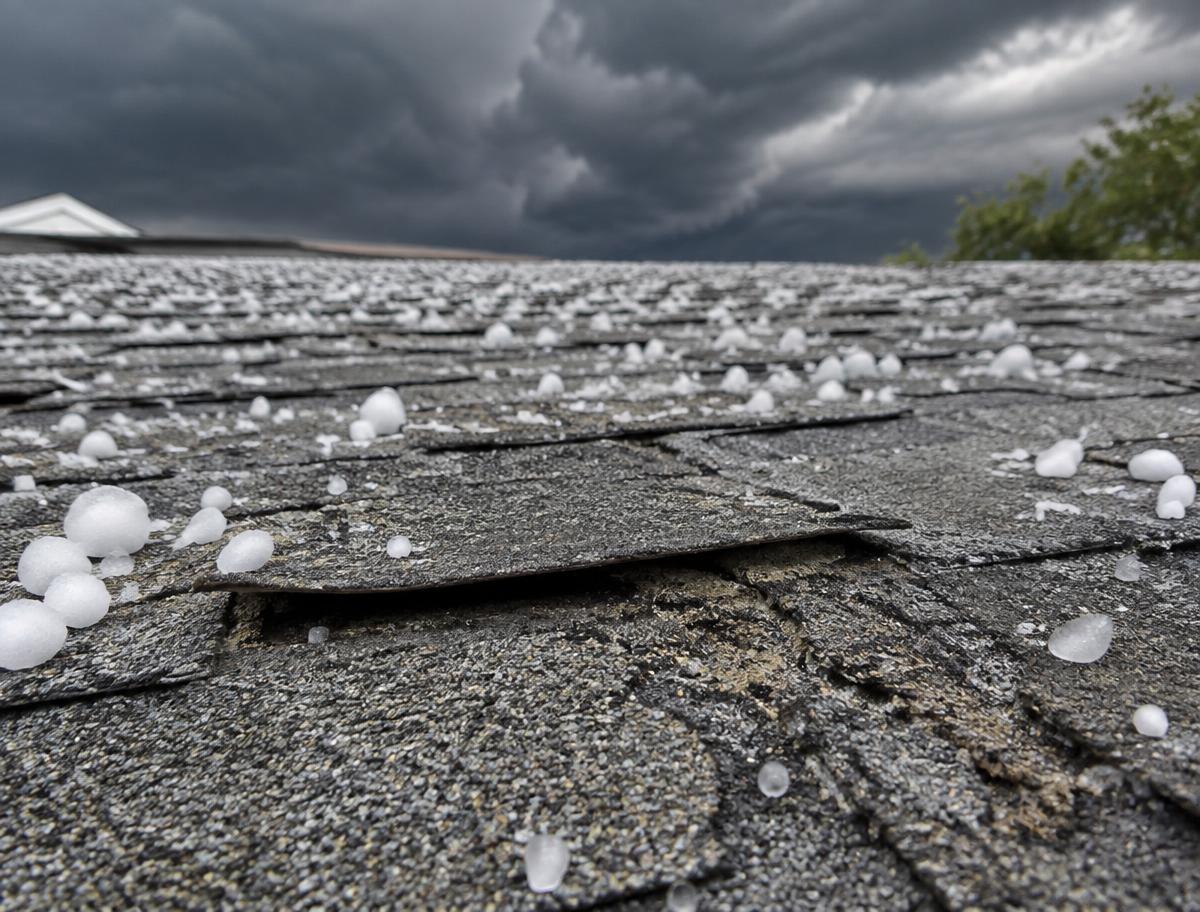
Common signs of storm, hail and wind damage
Roof damage after a storm is not always visible from the yard. A missing shingle is obvious; hail bruising, loosened seals and fine wind creases can be much easier to miss. Do not climb onto a wet, steep or damaged roof to look for them yourself.
Hail damage
- Dark impact marks or soft bruises where protective granules have been displaced
- Exposed shingle mat, cracks or splits around impact points
- Fresh granules in gutters or at downspout outlets
- Dents on roof vents, flashing or gutters that may indicate the size and direction of hail
Wind and debris damage
- Missing, lifted or folded shingles, especially along edges and ridges
- Horizontal creases where a shingle tab lifted and bent
- Loose ridge caps or flashing around walls, chimneys and roof penetrations
- Punctures or crushed areas caused by fallen limbs or airborne debris
What property owners should do after a storm
- Put safety first. Stay clear of downed lines, unstable limbs and visibly sagging ceilings. Do not get on the roof.
- Check the interior. Look for active drips, ceiling stains, damp insulation and water near electrical fixtures.
- Limit interior damage safely. Move valuables and use a container for drips if the area is safe to enter.
- Record what you can see. Take dated photos of interior water damage, fallen materials and visible exterior damage from the ground.
- Request a storm damage roof inspection. A professional inspection can identify damage and determine whether repair or replacement should be considered.
Emergency service note: 24/7 response, tarping and other temporary protection are not confirmed services. Submit an inspection request with details about active water entry, but contact emergency services for immediate safety hazards.
Storm damage roof inspection and documentation
A storm damage roof inspection looks at each accessible slope along with ridges, valleys, shingles, flashing, vents and other roof components. The goal is to distinguish physical storm damage from normal aging and identify every affected area before recommending work.
Where provided, damage documentation may include photographs, notes describing visible conditions and a written estimate. The exact inspection report format and included documentation should be confirmed when scheduling.
Repair versus replacement after severe weather
A targeted roof repair may be appropriate when storm damage is limited and compatible materials can be integrated into a roof that still has useful life. Repair might involve replacing damaged shingles, correcting flashing or restoring a specific impact area.
A roof replacement may deserve consideration when damage is spread across several slopes, the roof was already deteriorated or a durable repair is not practical. The decision should be based on the roof's physical condition, not a promise about insurance coverage.
Request a roof inspection after hail or wind
Use the inspection and estimate form below to describe the storm, visible damage and any active leak.
How storm damage repairs may relate to insurance
If you choose to file a claim, your insurer reviews the policy, evaluates the reported loss and decides what is covered. Roofing photos, observations and estimates may help describe the physical work being proposed, but they do not guarantee claim approval, coverage or a settlement amount.
For a focused explanation of inspections, contractor estimates and the claim-related roofing process, visit Insurance & Storm Damage Roofing.
Materials and warranties
We install CertainTeed products.
For low-slope roofing, we install Flintlastic SA, an SBS modified bitumen system. Its warranty terms differ from residential shingle warranties and are confirmed per project.
For siding, we install American Legend vinyl siding.
CertainTeed's qualifying residential shingle lines carry a lifetime limited warranty from CertainTeed as the manufacturer. Coverage terms, exclusions and transferability are set by CertainTeed, not by us, and depend on the product line and how the roof is installed. We'll give you the specific warranty document for the products used on your roof before work starts.
10-year workmanship warranty
This covers the quality of the installation itself, separate from the manufacturer's product warranty.
We are insured.